
The American Academy of Pediatrics has released a refreshed Prevention of Drowning policy in its June 2026 issue, the first major update since 2019. The big idea hasn't changed: no single safeguard prevents every drowning, so families need several layers working together — close supervision, fences, swim skills, and life jackets. With Memorial Day behind us and summer swim season starting, now is the perfect moment to set up those layers.
Sunday, May 31, 2026Safety
New AAP Drowning Guidance Lands Just in Time for Summer
Updated water safety advice as pools and beaches open across the country
The Teddy Editorial Desk · Grounded in AAP & CDC guidance
In Brief
The Briefing
Explainer
Why Layers Beat Any Single Rule
The AAP stresses that fences, supervision, swim lessons, and life jackets each catch what the others miss. Use them together, not one at a time.
Guidance
Swim Lessons Can Start After Age 1
The AAP recommends swim lessons for many children beginning after their first birthday. Babies under 12 months can enjoy parent-and-child water play instead.
Tips
Name a Water Watcher
Pick one adult to keep eyes on the water with no phone or distractions, then pass the role every 10–15 minutes so someone is always fully focused.
Prevention
Four-Sided Fences Save Lives
A fence that fully surrounds a home pool, separating it from the house, is one of the most effective ways to prevent young children from reaching the water alone.
Guidance
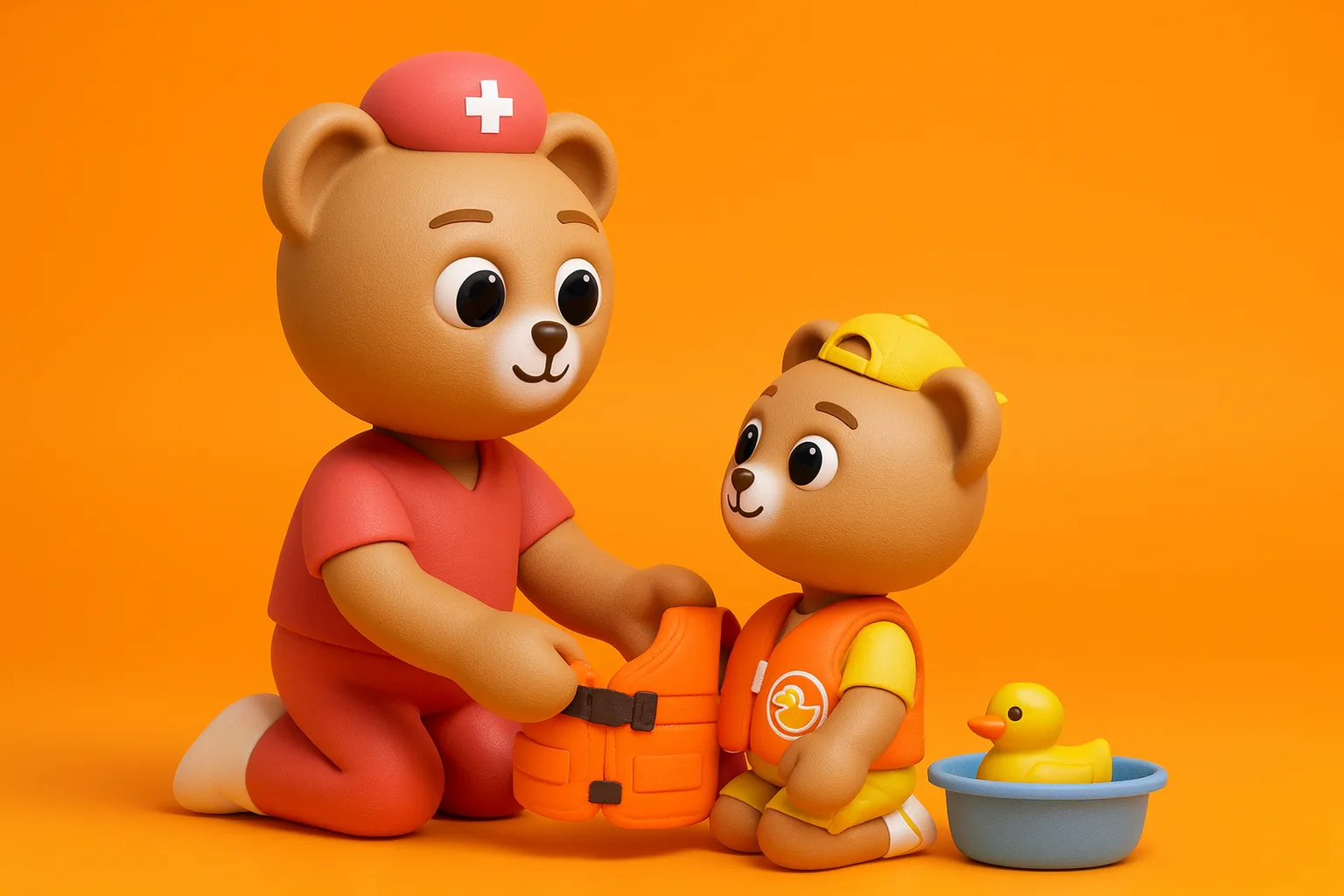
Pick the Right Life Jacket
Use a U.S. Coast Guard–approved life jacket near open water and while boating. Inflatable toys and water wings are not safety devices.
Questions
What Parents Are Asking
For the Clinic
Clinic Takeaway
With the updated June 2026 drowning policy out and summer underway, weave a brief water-safety check into well-child and summer visits. Ask families about home pool fencing, life jacket access, and swim lesson plans, and offer CPR resources — a 60-second conversation reframed around layered protection can prevent a tragedy.
Source: AAP Prevention of Drowning policy (Pediatrics, June 2026)
Always Available