
Drowning is the leading cause of death for children ages 1 to 4, and nearly two-thirds of pediatric drownings happen between May and August. The American Academy of Pediatrics urges families to think in 'layers' this weekend: close adult eyes on the water, swim lessons, four-sided pool fencing, properly fitted life jackets, and a caregiver who knows CPR. No single step is enough on its own — but stacked together, they prevent the vast majority of tragedies.
Saturday, May 23, 2026Safety
A Safer Start to Swim Season
Memorial Day weekend kicks off the riskiest stretch of the year for child drownings — here's how families can stack the odds in their favor
The Teddy Editorial Desk · Grounded in AAP & CDC guidance
In Brief
The Briefing
Explainer
The 'Layers of Protection' Approach
The AAP recommends combining supervision, swim lessons, four-sided pool fencing, life jackets, and CPR training. Each layer covers what the others miss.
Guidance
Swim Lessons Can Start at Age 1
Current AAP guidance says formal swim lessons can begin as early as a child's first birthday for many families. Readiness varies — your pediatrician can help you decide.
Tips
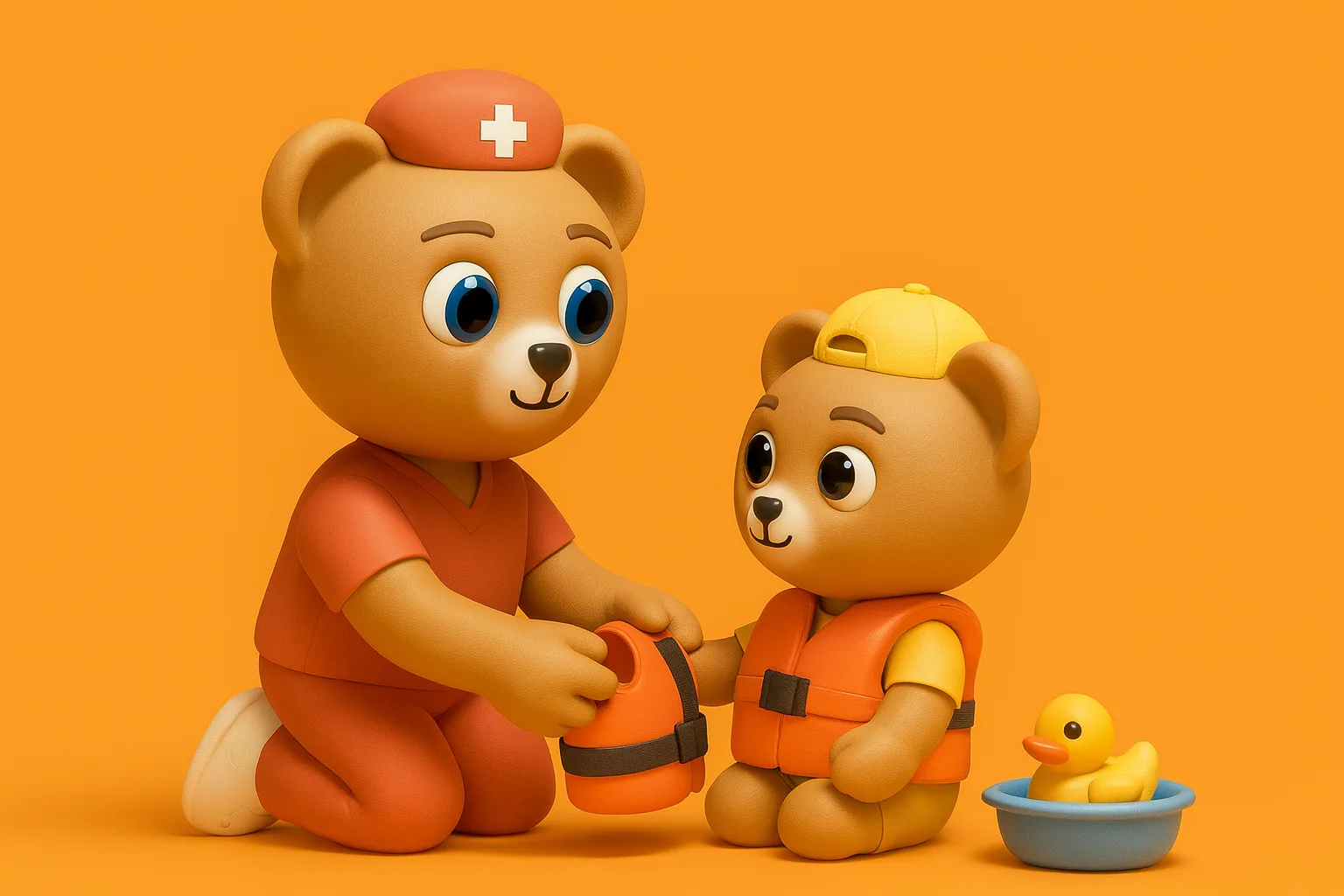
Life Jackets Beat Water Wings
U.S. Coast Guard-approved life jackets are the only flotation devices designed to keep a child's face above water. Inflatable arm bands and pool floats are toys, not safety gear.
Did You Know
Drowning Is Quiet and Fast
Most child drownings happen in under a minute and make almost no sound. Adults should be within arm's reach of young or non-swimming children — phones down.
Tips
Learn Hands-Only CPR This Weekend
The AAP and American Heart Association recommend that every caregiver and teen know rescue breathing and chest compressions. Free 60-second video tutorials are available online.
Questions
What Parents Are Asking
For the Clinic
Clinic Takeaway
Memorial Day weekend marks the start of the highest-risk stretch of the year for pediatric drowning. Consider a short, plain-language message to families with children under 5 reinforcing the layered-protection model — touch supervision, four-sided fencing, Coast Guard-approved life jackets, and CPR training. Posting a one-page handout in well-child visit rooms and adding a brief water-safety prompt to age 1–4 visits through August can meaningfully shift behavior at the moments when families are about to use a pool, lake, or beach.
Source: AAP Council on Injury, Violence, and Poison Prevention
Always Available